

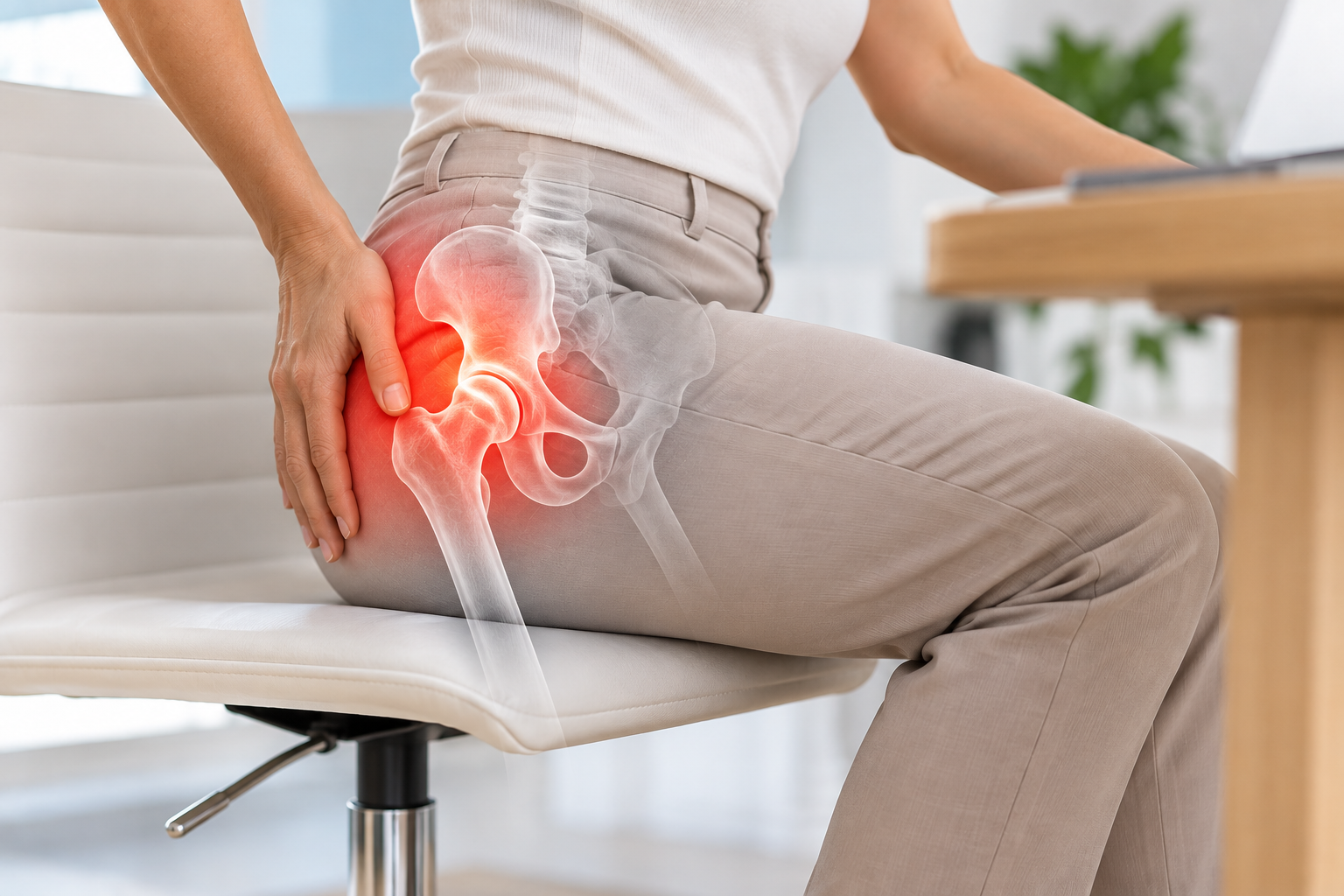
Hip pain can become particularly noticeable after sitting for an extended period. You may experience discomfort when getting up from a chair, sitting at a desk, travelling in a car, or relaxing at home.
While occasional discomfort may be related to prolonged inactivity or muscle stiffness, persistent hip pain can have several possible causes. Identifying the underlying cause is important because different hip conditions may require different approaches to management.
At PJS Orthopaedics, hip conditions are assessed individually, with treatment recommendations based on each patient’s symptoms, activity levels and overall circumstances.
Why Can Sitting Cause Hip Pain?
Sitting keeps the hip joint in a bent position for an extended period. Remaining in one position may contribute to stiffness or discomfort, particularly if the hip is already affected by an underlying condition.
Some people notice that their pain is worst when they first stand after sitting and gradually improves once they begin moving.
However, the location and pattern of pain can provide important clues about its possible cause.
Common Causes of Hip Pain When Sitting
Hip Osteoarthritis
Osteoarthritis can affect the hip joint and may cause pain, stiffness and reduced movement.
People may experience discomfort after periods of inactivity, including sitting for extended periods. Pain can occur around the groin, front of the hip, thigh or buttock.
Other symptoms may include difficulty putting on shoes or socks, walking longer distances or getting in and out of a car.
Hip Flexor or Muscle-Related Problems
The muscles and tendons surrounding the hip can become irritated or tight following changes in activity, exercise or prolonged periods in one position.
This may cause discomfort when sitting or when standing after sitting.
Greater Trochanteric Pain Syndrome
Pain on the outside of the hip can be associated with greater trochanteric pain syndrome, which involves the soft tissues around the outer hip.
Symptoms may include:
-
Pain when lying on the affected side
-
Tenderness around the outside of the hip
-
Pain when walking or climbing stairs
-
Discomfort after prolonged sitting
Hip Impingement
Hip impingement occurs when there is abnormal contact between structures within the hip during certain movements.
Some people experience pain in the groin or front of the hip, particularly with prolonged sitting, deep hip flexion or certain physical activities.
Previous Hip Injury
Previous injuries can sometimes contribute to changes in hip movement or joint function. If you have a history of hip trauma or surgery and develop persistent pain when sitting, an assessment may help determine the cause.
Where Do You Feel Hip Pain?
The location of your discomfort can vary depending on the underlying cause.
Pain in the Groin or Front of the Hip
Pain in this area may be associated with conditions affecting the hip joint itself.
Pain on the Outside of the Hip
Outer hip pain can be associated with soft-tissue conditions around the hip, including greater trochanteric pain syndrome.
Pain in the Buttock
Pain around the buttock can have several possible causes and does not necessarily originate from the hip joint.
Because different conditions can produce similar symptoms, an assessment is important if symptoms persist.
Why Does My Hip Hurt When I Stand Up After Sitting?
Some people experience a sharp or aching sensation when they first stand after sitting for a long time.
This may occur because the hip has remained in one position for an extended period. Stiffness associated with conditions such as osteoarthritis may also become more noticeable after inactivity.
If the discomfort regularly occurs, becomes more severe, or affects your mobility, consider discussing it with your healthcare professional.
Can Changing Your Sitting Habits Help?
If prolonged sitting contributes to your discomfort, simple changes may help reduce stiffness.
You could consider:
-
Taking regular movement breaks
-
Changing position throughout the day
-
Avoiding sitting for several uninterrupted hours
-
Adjusting your workstation
-
Incorporating appropriate movement into your daily routine
These measures may help with general stiffness but do not address every possible cause of hip pain.
When Should You Seek Medical Advice?
Consider arranging an assessment if you experience:
-
Persistent hip pain
-
Pain that is getting worse
-
Reduced hip movement
-
Difficulty walking
-
Pain that interferes with sleep
-
Difficulty getting in or out of a chair or car
-
Pain that affects your work, exercise or daily activities
-
Symptoms following an injury
If you are unable to bear weight following a significant injury or have severe sudden pain, seek urgent medical attention.
How Is Hip Pain Diagnosed?
An assessment usually begins with a discussion about your symptoms, medical history and daily activities.
Your healthcare professional may assess:
-
Hip movement
-
Muscle strength
-
Walking pattern
-
Areas of tenderness
-
The location and nature of your pain
Depending on the findings, imaging such as an X-ray or other investigations may be recommended.
Not everyone with hip pain requires imaging. The appropriate investigations depend on the individual clinical circumstances.
Treatment Options
Treatment depends on the underlying cause of your hip pain.
Depending on the diagnosis, management may include:
-
Activity modification
-
Physiotherapy
-
Strengthening exercises
-
Mobility exercises
-
Pain management
-
Weight management where appropriate
-
Further orthopaedic assessment
Surgery is not required for every cause of hip pain. If a surgical option is being considered, your healthcare professional can discuss the potential benefits and risks based on your individual circumstances.
Frequently Asked Questions
Is hip pain after sitting always arthritis?
No. Hip pain after sitting can have many causes, including osteoarthritis, muscle or tendon problems and conditions affecting the soft tissues around the hip.
Why does my hip hurt when I stand after sitting?
The hip may become stiff after remaining in one position for an extended period. Persistent pain when standing may also be associated with an underlying hip condition and should be assessed if it continues.
Should I keep moving if my hip hurts after sitting?
Gentle movement may help reduce stiffness for some people. However, persistent or worsening pain should be assessed rather than managed solely through activity.
When should I see an orthopaedic specialist?
If hip pain persists, limits your activities, affects your sleep or is associated with reduced movement, an assessment can help determine the underlying cause and appropriate management.
Supporting Your Hip Health
Regular movement, appropriate exercise and maintaining muscle strength can support mobility and overall joint health.
If you spend long periods sitting for work or travel, taking regular movement breaks may also help reduce stiffness.
However, ongoing hip pain should not simply be attributed to sitting. An assessment can help determine whether another condition is contributing to your symptoms.
Book an Orthopaedic Consultation
If hip pain when sitting is affecting your mobility or quality of life, an individual assessment can help identify the underlying cause.
Dr Parminder J. Singh provides assessment and management of a wide range of hip and knee conditions, with treatment recommendations tailored to each patient’s individual circumstances.
Leave A Comment