

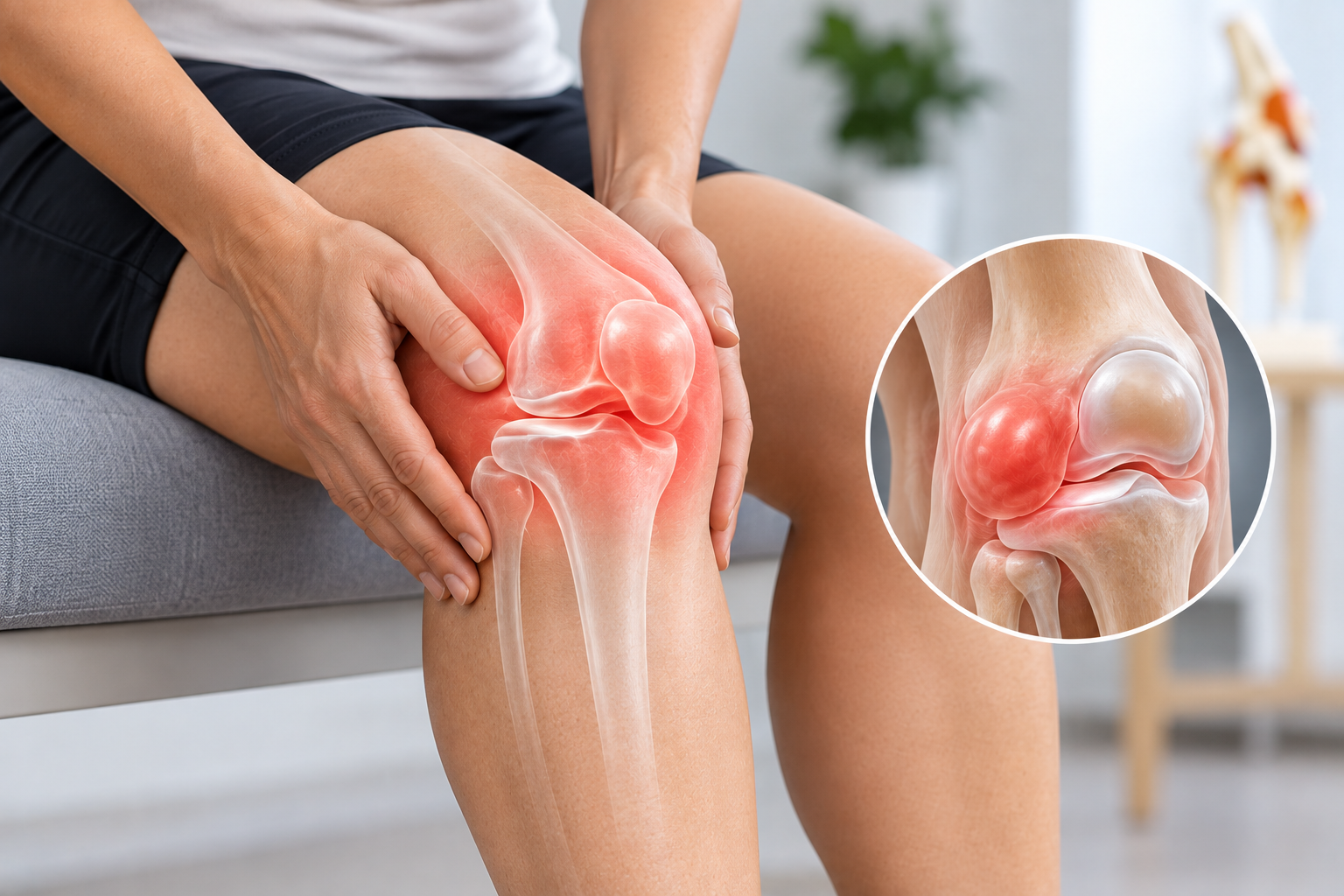
A swollen knee can be concerning, particularly when there has been no obvious injury.
Knee swelling can develop gradually or appear quite suddenly. Sometimes it is associated with pain and stiffness, while other people may notice swelling before experiencing significant discomfort.
There are many possible reasons for a swollen knee without a clear injury, ranging from arthritis and overuse to inflammatory conditions and, less commonly, infection.
Understanding the possible causes can help you know when it may be appropriate to seek medical advice.
What Causes Knee Swelling?
The knee contains several structures that can become irritated or inflamed. The joint also produces a small amount of fluid to help it move smoothly.
When the knee becomes irritated, the body may produce additional fluid. This can result in visible swelling around the joint.
The swelling may occur inside the joint or around the surrounding tissues.
Common Causes of a Swollen Knee Without an Injury
1. Osteoarthritis
Knee osteoarthritis is a common cause of pain, stiffness and swelling.
As the joint changes over time, irritation within the knee can lead to episodes of swelling. Symptoms may become more noticeable after prolonged walking, standing or other activities that place load on the joint.
People with knee arthritis may also experience:
-
Knee stiffness
-
Pain during movement
-
Reduced range of motion
-
Difficulty using stairs
-
Pain after periods of activity
2. Overuse
Knee swelling can sometimes develop after an increase in physical activity, even without a specific injury.
For example, swelling may occur after:
-
Increasing walking distance
-
Starting a new exercise program
-
Returning to sport
-
Repetitive squatting
-
Spending longer periods on your feet
The knee may become irritated when activity levels increase faster than the body can adapt.
3. Bursitis
Bursae are small fluid-filled sacs that reduce friction between tissues around the knee.
When a bursa becomes inflamed, it can cause localized swelling and tenderness.
Kneeling for long periods or repetitive pressure on the knee can contribute to some forms of bursitis.
4. Meniscus Problems
The meniscus is a piece of cartilage that helps distribute load within the knee.
Meniscus problems can sometimes occur without a memorable injury, particularly as the knee changes with age.
Symptoms may include:
-
Swelling
-
Pain with certain movements
-
Clicking
-
Catching
-
Difficulty fully bending or straightening the knee
Not every meniscus problem requires surgery. Treatment depends on the type of problem, symptoms and individual circumstances.
5. Inflammatory Conditions
Some inflammatory conditions can cause swelling in one or more joints.
The knee may feel swollen, stiff or warm, and symptoms can sometimes occur without an obvious injury.
If you experience recurrent or unexplained joint swelling, medical assessment can help determine whether an inflammatory condition may be contributing.
6. Gout
Gout occurs when urate crystals build up within a joint, causing inflammation.
A gout attack can cause sudden swelling, pain, warmth and tenderness. Although the big toe is a common location, gout can also affect the knee.
If knee swelling develops suddenly and is accompanied by significant pain or warmth, medical assessment is appropriate.
7. Joint Infection
A joint infection is uncommon but potentially serious.
Symptoms can include:
-
Rapidly developing swelling
-
Significant pain
-
A hot or red joint
-
Difficulty moving the knee
-
Fever or feeling generally unwell
A suspected joint infection requires urgent medical assessment.
Why Does My Knee Swell Without Hurting Much?
Swelling does not always mean severe pain.
Some conditions, including osteoarthritis or certain internal knee problems, may cause noticeable fluid buildup with relatively mild discomfort.
However, unexplained swelling should not automatically be ignored, particularly if it continues, repeatedly returns, or is associated with other symptoms.
When Should You See a Doctor?
Arrange a medical assessment if your knee swelling:
-
Has no obvious explanation
-
Persists or repeatedly returns
-
Is affecting your ability to walk
-
Is associated with ongoing pain
-
Causes stiffness or reduced movement
-
Is accompanied by clicking, catching or locking
-
Develops after an increase in activity
Seek urgent medical attention if the knee suddenly becomes very swollen, hot, or red, particularly if you have severe pain or a fever.
How Is a Swollen Knee Diagnosed?
Your doctor will usually ask about:
-
When the swelling started
-
Whether it appeared suddenly or gradually
-
Your activity levels
-
Previous knee problems
-
Other symptoms
-
Any recent illness or medical conditions
The knee may be examined for swelling, tenderness, movement and stability.
Imaging such as an X-ray, ultrasound or MRI may sometimes be recommended depending on the suspected cause.
In some situations, fluid from the knee may need to be assessed to help identify the cause of swelling.
What Can You Do for a Swollen Knee?
The appropriate approach depends on why the knee is swollen.
For mild swelling following increased activity, temporarily reducing activities that aggravate the knee may help. Ice and elevation may also provide short-term symptom relief for some people.
However, repeatedly treating swelling without determining the underlying cause may not address the problem.
If swelling persists or keeps returning, consider arranging an assessment.
How Is Knee Swelling Treated?
Treatment depends on the diagnosis.
Depending on the underlying cause, management may include:
-
Activity modification
-
Physiotherapy
-
Strengthening and mobility exercises
-
Pain management
-
Treatment of arthritis
-
Management of inflammatory conditions
-
Treatment of meniscus or other internal knee problems
-
Surgery in selected cases when clinically appropriate
There is no single treatment that is suitable for every cause of knee swelling.
Can Knee Swelling Be Prevented?
Not all causes of knee swelling can be prevented. However, maintaining healthy movement and gradually increasing physical activity may help reduce avoidable stress on the joint.
Helpful habits can include:
-
Increasing exercise gradually
-
Maintaining leg strength
-
Using appropriate technique during exercise
-
Allowing adequate recovery between strenuous activities
-
Maintaining a healthy weight
-
Getting persistent knee symptoms assessed
Leave A Comment